
“A Duchenne Smile” began with an unexpected collaboration – a melody kicked out on a Fisher Price piano by Jill Townsend’s own four-month-old daughter. The unconventional chord progression inspired an equally uncharacteristically upbeat composition for Fetching Pails, one that is undeniably bright and happy (and ended up as a sample in the final recording). The title refers to a neurological distinction in smiling; a Duchenne smile is a genuine one, signaling authentic positive emotion. Fitting for the new direction.
Here’s Jill Townsend revealing a bit of insight about the track:
This demo is the first I shared with Andrew to see if he’d like to be my drummer. It has a more overt 80s sensibility to it than my previous stuff at the time. This is me starting to put down the guitar (or pass it along to guitarist Dillon, rather) and write more songs on a synthesizer. During mixing, I added some samples of dialogue from old horror/sci-fi films, a theme I’ve been threading through many of our newer songs.
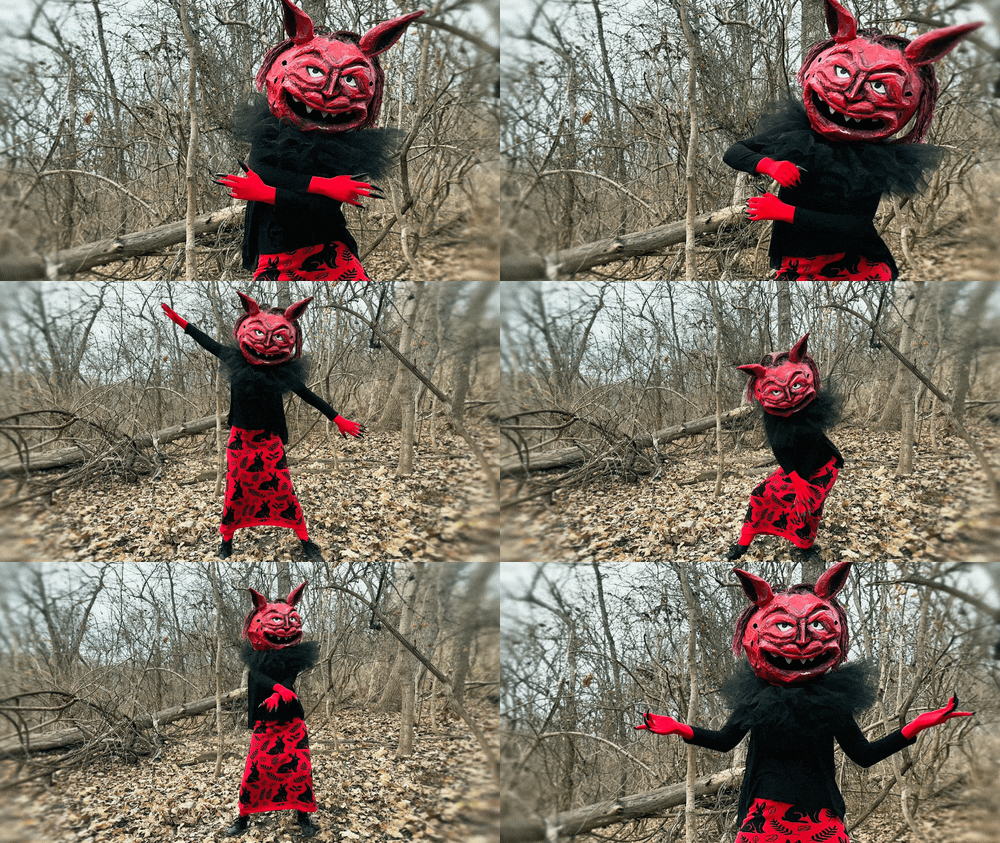
The paper mache heads in the artwork and accompanying videos were created by my friend (and former member of Peachy), Leah Miller. I wanted to make a stop animation video teaser for the song and at the last minute I decided to put my 4 year old daughter in it, which made it a sort of full circle moment, since it was her keyboard kicks that inspired the song.
The track also happens to be a real standout when you see Fetching Pails live. All and all, an excellent addition to the new era of songs emerging from the trio.
Watch the video on YouTube, support the song on Bandcamp or Ampwall and add it to your favorite streamer. Delights for your eyes and ears.
Oh! And just what IS a “Duchenne Smile“? A Duchenne smile, named after the 19th-century French neurologist, is a smile signaling authentic positive emotion, a genuine smile. Unlike a fake smile that only uses the mouth, the Duchenne smile also uses muscles around the eyes, lighting up the whole face. The smiles we have as newborns are often reflexive. Duchenne smiling happens with frequency around 4 months old.
Leave a Reply